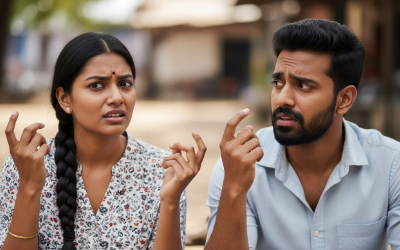
Same Language, Different Worlds: Sri Lankan vs. Indian Tamil
Tamil is a language that is ancient, rich, and spoken by millions across the globe. But like any language with a vast diaspora, it has evolved into distinct dialects. The two most prominent are the Tamil spoken in Tamil Nadu, India, and the Tamil spoken in Sri Lanka. While they are mutually intelligible, they possess fascinating differences in vocabulary, pronunciation, and even grammar, shaped by centuries of separate cultural and historical paths.
Vocabulary: Same Meaning, Different Words
One of the most noticeable differences is the vocabulary. Due to historical reasons, Sri Lankan Tamil, particularly the Jaffna dialect, retains many older, classical Tamil words that have been replaced by Sanskrit-derived or English words in Indian Tamil. For example:
-
For "water," Indian Tamils commonly say
தண்ணீர்(thaṇṇīr), while Sri Lankan Tamils often useதண்ணி(thaṇṇi) in colloquial speech but prefer the classicalநீர்(nīr) in formal contexts. -
A "bicycle" is often called a
சைக்கிள்(saikkil) in India, but in Sri Lanka, you'll hearஉந்துருளி(unturuḷi).
Pronunciation: The Case of 'ற' (ṟa) and 'ர' (ra)
Pronunciation, or accent, is a key differentiator. Sri Lankan Tamil is often perceived as being more formal and adhering closer to the classical pronunciation of certain letters. The pronunciation of the letter 'ற' (ṟa) and 'ர' (ra), for example, is often more distinct in Sri Lankan Tamil than in many Indian dialects. In classical Tamil, these letters represent two different sounds:
- ர (ra): An alveolar tap or flap ([ɾ]), which is a light, quick sound like the single 'r' in the Spanish word cara or the 'tt' in the American pronunciation of "water."
- ற (ṟa): An alveolar trill ([r]), which is a stronger, often "rolled" sound like the 'rr' in the Spanish word perro.
Sri Lankan Tamil largely preserves this distinction. However, in many Indian Tamil dialects, the sounds have merged, or the pronunciation of 'ற' has shifted. This can sometimes make it challenging for speakers of one dialect to perfectly understand the other at first listen, as the change in sound can also change a word's meaning. The following minimal pairs (words that differ only by this sound) perfectly illustrate this:
| English Meaning | Tamil Word (with soft 'ர') | Tamil Word (with strong 'ற') |
|---|---|---|
| File (tool) / Virtue | அரம் (aram) | அறம் (aṟam) |
| Tree / Valor | மரம் (maram) | மறம் (maṟam) |
| Half / Room | அரை (arai) | அறை (aṟai) |
Pop Culture and Real-World Consequences
These charming linguistic differences were recently brought to
life in the fictional film "Tourist Family." The movie finds much
of its heart and humor in the small communication hurdles a Sri
Lankan family encounters in India, using examples like the word
for bicycle (உந்துருளி vs. சைக்கிள்) to
create moments of shared laughter. However, this lighthearted
portrayal stands in stark contrast to the grim reality faced by
many. For a real Tamil family of four—Das, his wife Vasanthi, and
their sons—who were forced to flee the economic crisis in Sri
Lanka as refugees, these same linguistic differences are not a
source of humor, but of constant fear. Hiding in Chennai and
pretending to be a Malayali family, their distinct Sri Lankan
dialect is a dangerous liability. For them, a single slip of the
tongue isn't a charming mix-up; it's a risk that could jeopardize
their safety and the fragile new life they are trying to build.
A Quick Vocabulary Guide: Sri Lankan vs. Indian Tamil
To illustrate these differences more clearly, here’s a handy comparison chart.
| English Meaning | Sri Lankan Tamil (ஈழத் தமிழ்) | Indian Tamil (தமிழ்நாட்டுத் தமிழ்) |
|---|---|---|
| Bicycle | உந்துருளி (Unthuruli) | சைக்கிள் (Cycle) |
| To Speak | கதைத்தல் (Kathaiththal) | பேசுதல் (Pesuthal) |
| Key | திறப்பு (Thirappu) | சாவி (Saavi) |
| Hospital | வைத்தியசாலை (Vaithiyasaalai) | மருத்துவமனை (Maruthuvamanai) |
| Exam | பரீட்சை (Pareetchai) | தேர்வு (Thervu) |
| Kitchen | அடுக்களை (Adukkalai) | சமையலறை (Samayalarai) |
| To Hurry | விரசுதல் (Virasuthal) | அவசரப்படுதல் (Avasarappaduthal) |
| Ice Cream | குளிர்களி (Kulirkali) | ஐஸ்கிரீம் (Ice Cream) |
| Passport | கடவுச்சீட்டு (Kadavuchcheettu) | பாஸ்போர்ட் (Passport) |
| Bus Stop | தரிப்பிடம் (Tharippidam) | நிறுத்தம் (Nirutham) |
| Peanut | கச்சான் (Kachaan) | நிலக்கடலை (Nilakkadalai) |
| Bucket | வாளி (Vaali) | பக்கெட் (Bucket) |
| Boring / Tedious | அலுப்பு (Aluppu) | சலிப்பு (Salippu) |
| Story / Matter | சங்கதி (Sangathi) | விஷயம் (Vishayam) |
| Aunt (Mother's Sister) | குஞ்சம்மா (Kunjamma) | சித்தி (Chithi) |
| Famous | பேர் போன (Paer Pona) | புகழ்பெற்ற (Puhazhpetra) |
| Breakfast | காலை ஆகாரம் (Kaalai Aaharam) | சிற்றுண்டி (Sitrundi) / டிபன் (Tiffin) |
| To Wash (Clothes) | தோய்த்தல் (Thoiththal) | துவைத்தல் (Thuvaiththal) |
| Juice | பழச்சாறு (Pazhachaaru) | ஜூஸ் (Juice) / சாறு (Saaru) |
| A Little | கொஞ்சூண்டு (Konjoondu) | கொஞ்சம் (Konjam) |
A Shared Heritage
Understanding these differences is not about deciding which dialect is "better." Rather, it's about appreciating the rich tapestry of the Tamil language. Whether you're learning the Chennai dialect or the Jaffna dialect, you are connecting with a vibrant and ancient culture. Recognizing these variations will not only make you a more well-rounded speaker but will also give you a deeper appreciation for the language's incredible history and its global presence.